

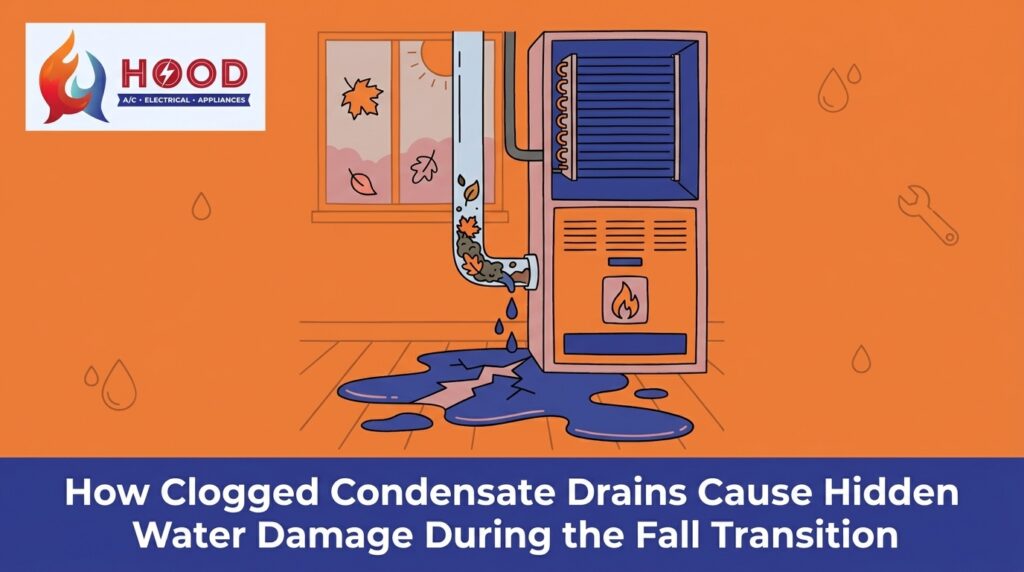
The Silent Threat Lurking in Your AC This September
The summer heat is finally breaking, but that false sense of security could be hiding a costly problem right above your ceiling. In fact, understanding how clogged condensate drains cause hidden water damage during the fall transition is critical before you turn off your thermostat for the season. At Hood Service Company, we often hear homeowners assume that because their air conditioner is running less frequently, the risk of system failure drops. Unfortunately, our technicians know from experience that the exact opposite is true when it comes to your condensate drain line.
To protect your home before the heating season officially begins, scheduling professional AC maintenance is the most reliable way to clear out lingering summer debris.
During the September fall transition, the most significant risk of AC-related water damage actually reaches its peak. Throughout the intense summer months, you likely checked on your system regularly, changed filters, and listened for odd noises. But as the weather cools, that daily monitoring stops. This reduced attention allows drain pan overflows to go completely unnoticed until water spots appear on your ceiling or drywall is permanently ruined. The damage we typically discover in October isn’t caused by fall weather—it is the direct result of the heavy biological residue left over from months of continuous summer usage.
The Summer Legacy: Why Condensate Drain Lines Fill With Algae
The problem: By the time late summer arrives, your air conditioner’s condensate drain line is likely coated with a thick, wet layer of algae, mold, and biological debris.
The cause: Central air conditioners do more than just lower the temperature of your home; they actively extract humidity from the indoor air. During peak summer heat in Corsicana, TX, our team consistently observes that a standard residential cooling system can produce anywhere from 5 to 20 gallons of condensation every single day. This constant flow of water drips off the cold evaporator coil and collects in the primary drain pan before traveling down a narrow PVC pipe. The dark, damp environment of the indoor coil and drain pan creates the perfect breeding ground for organic matter. Because the system runs continuously through the long, humid subtropical summers of East Texas, this biological sludge stays wet, moving slowly but steadily through the gravity-fed line.
The solution: Recognizing this massive volume of moisture and biological growth is the first step in preventing a catastrophic backup. Only by addressing this summer legacy can you protect your home during the upcoming seasonal shift.
The Physics of Condensation and Organic Growth
Understanding the mechanics behind this buildup reveals why it is nearly impossible to prevent without professional intervention. Here is what happens inside your unit:
- Constant moisture generation: Warm, humid indoor air passes over the freezing cold evaporator coils, causing water vapor to instantly condense into liquid droplets.
- Airborne food sources: As the system pulls in air, microscopic dust particles, pet dander, and biological spores bypass the filter and settle into the wet drain pan, feeding the growing algae.
- Gravity-fed limitations: Because residential condensate lines rely entirely on gravity rather than a pressurized pump, they struggle to clear heavy, sticky sludge naturally. The water moves just fast enough to keep the algae alive, but too slow to flush it out completely.
The Fall Transition: When Wet Sludge Turns to Solid Blockages
The true danger does not occur when the system is running constantly; it happens when the system begins to cycle on and off. The September fall transition brings fluctuating temperatures to East Texas, with warm afternoons and surprisingly cool nights. This weather pattern forces a shift from constant summer cooling to highly intermittent fall cycling.
Without a constant, daily flow of water to keep the summer algae wet and pliable, the biological sludge inside the PVC pipe begins to dry out. As the moisture evaporates, the algae hardens, transforming from a slow-moving slime into a concrete-like blockage that grips the inside of the narrow pipe.
The breaking point typically arrives on an unseasonably warm fall afternoon. When the thermostat triggers a sudden, long cooling cycle, the active system rapidly extracts humidity and dumps a large volume of water into a drain line that is now completely blocked by hardened algae. Because the line is sealed shut, the water has nowhere to go but backward.
The Danger of Intermittent Cooling Cycles
It seems counterintuitive, but reduced air conditioner usage is actually more dangerous for your drain lines than constant, heavy usage. In our years of servicing East Texas HVAC systems, we’ve found the timeline of this failure is remarkably predictable:
- Early September: The AC runs less frequently, allowing the wet algae in the line to sit stagnant for days at a time.
- Mid September: The stagnant algae dries out, hardening against the walls of the PVC pipe and completely sealing the exit.
- Late September: A random hot day forces the AC to run for several hours, rapidly filling the drain pan with condensation that cannot escape, leading to an immediate overflow.

The Mechanics of Hidden Water Damage
When the main condensate line is blocked by hardened fall algae, the primary drip pan quickly fills to the brim and overflows. In a perfectly designed and maintained system, this overflowing water would spill into a secondary drain pan (often located beneath the entire indoor unit) and trigger a safety float switch to shut the system down. However, if the system has not been properly maintained, that secondary pan may be rusted, misaligned, or clogged itself.
Once the water breaches the secondary defenses, the path of destruction begins. Because many indoor HVAC units in Corsicana, TX are installed in attics or hidden utility closets, the escaping water seeps directly into the surrounding building materials. It saturates attic insulation, pools heavily on the top side of drywall ceilings, and leaks silently behind wall cavities.
Why Fall Leaks Go Unnoticed
The most dangerous aspect of a fall condensate leak is the psychological shift in how homeowners interact with their homes. During the summer, you are highly attuned to the performance of your cooling system. If something sounds wrong or feels humid, you investigate immediately. In the fall, that vigilance disappears.
| Condition | Summer Operation | Fall Transition Operation |
|---|---|---|
| System Monitoring | High daily awareness by homeowner | Virtually ignored as weather cools |
| Algae State | Wet, slimy, slow-moving | Dry, hardened, concrete-like |
| Water Damage Risk | Moderate (water usually flows past soft clogs) | Severe (water backs up instantly behind solid clogs) |
| Repair Costs | Usually limited to standard drain clearing | Often involves drywall and insulation replacement |
Because attic installations completely conceal the pooling water, the drywall ceiling acts like a sponge, absorbing gallons of condensation over several days. Homeowners only realize there is a problem when the drywall finally reaches total saturation and collapses, or when a massive brown water stain appears in the hallway. The compounding cost of repairing structural water damage, replacing insulation, and repainting ceilings vastly outweighs the simple cost of preventative maintenance.
Early Warning Signs of a Compromised Condensate System
Catching a condensate drain issue before it destroys your ceiling requires paying close attention to subtle clues during the September fall transition. Your system will usually give you a few warning signs before a catastrophic overflow occurs. If you notice any of the following symptoms, our team recommends acting immediately.
- Musty, damp odors: A sour or swampy smell coming from your supply vents is a primary indicator of standing water and decaying algae in the drain pan. If you are wondering why your AC smells musty when switching to heating, a backed-up condensate line is often the culprit.
- Unexpected system shutdowns: Modern air conditioners are equipped with safety float switches in the drain pan. If the water level rises dangerously high, the switch trips and cuts power to the unit to prevent flooding. If your AC suddenly stops working on a warm fall day, a clogged drain is a highly likely cause.
- Short-cycling behavior: If the float switch is highly sensitive, the system may turn on, run for a few minutes until the water level rises, shut off, and then turn back on once the water slowly drains past a partial clog.
- Unexplained indoor humidity: When the drain pan is full of stagnant water, the blower motor pushes that moisture back into your living space, making the home feel sticky and uncomfortable even when the AC is running.
- Small water spots near the indoor unit: Check the floor around your indoor air handler or furnace. Small puddles, rust marks on the metal casing, or damp spots on the surrounding wood are clear signs that the primary pan is already failing.
The Danger of DIY Drain Clearing Methods
When homeowners in Corsicana, TX suspect a clogged AC drain, we frequently see them turn to internet forums for quick fixes before eventually calling us for a much larger repair. Unfortunately, the DIY methods that sometimes work on soft, wet summer clogs are entirely ineffective—and often highly destructive—when used against solidified fall blockages.
The quick fix myth: Many online guides suggest pouring bleach or vinegar down the condensate access pipe. While these household liquids can kill surface bacteria, they lack the chemical strength and physical mass to dissolve a hardened, dried-out algae blockage. Pouring liquid onto a solid clog simply adds more volume to a pipe that is already backing up, accelerating the overflow into your home.
Furthermore, attempting to physically force the clog out using wire coat hangers, plumbing snakes, or consumer-grade air compressors is incredibly risky. The PVC pipes used for condensate drains are thin and easily punctured. Shoving a wire down the line can crack the joints, creating permanent leaks inside your walls. Using an air compressor without proper pressure regulation can literally blow the PVC fittings apart or push the solid sludge deeper into inaccessible areas of the plumbing.
Why Bleach and Vinegar Aren’t Enough for Fall Clogs
The chemical limitations of household liquids make them unsuitable for transition-season blockages. Bleach is highly corrosive and, if it backs up into the primary drain pan, the fumes can severely damage the delicate aluminum fins of your evaporator coil. Vinegar is too weak to break down the dense cellular structure of dried algae.
Clearing a hardened fall blockage requires specialized professional extraction equipment. Technicians use high-powered, regulated suction devices designed specifically for HVAC systems to pull the blockage out safely, rather than trying to push it further in or dissolve it with dangerous chemicals.
Professional Extraction: Stopping Water Damage Before It Starts
The problem: Leaving summer biological buildup inside your HVAC system over the winter guarantees a severe clog the moment you turn the AC back on next spring, and risks immediate water damage during warm fall days.
The cause: Gravity alone cannot clear the heavy sludge generated by months of continuous operation, and DIY methods risk damaging the equipment.
The solution: Professional extraction is the only reliable way to reset the system. Our technicians at Hood Service Company focus our proactive fall tune-ups specifically on clearing hidden summer buildup before it causes costly water damage, protecting the structural integrity of your home rather than just reacting to failures after the fact.
During a professional fall tune-up, a technician will use specialized, high-lift vacuums to extract the hardened algae and standing water from the entire length of the PVC line. Once the physical blockage is removed, they apply safe, HVAC-approved treatments to the drain pan to neutralize any remaining biological growth.
Beyond just clearing the pipe, a comprehensive inspection ensures that the primary drain pan is properly aligned (as pans can warp or shift over time) and that the safety float switches are functioning correctly. Removing this stagnant, algae-filled water also drastically improves your indoor air quality, preventing mold spores from circulating through your ductwork all winter long. By framing this service as a critical extraction of summer buildup rather than just routine heating preparation, you guarantee your system is clean, safe, and ready for the September fall transition.
Frequently Asked Questions About Fall AC Leaks
Why is my AC leaking water in the fall?
Your AC leaks in the fall because intermittent cooling cycles allow the wet algae built up during the summer to dry out and harden inside the drain line. When a warm fall day causes the system to run for a long period, it dumps condensation into this solid blockage. Because the water cannot drain, it quickly overflows the drip pan and leaks into your home. This is why the Corsicana, TX fall transition is a peak time for unexpected water damage.
What are the hidden signs of a clogged condensate drain?
The hidden signs of a clogged condensate drain often appear before actual water damage occurs. You may notice a musty, swampy odor coming from your air vents when the system turns on. Additionally, if your AC suddenly shuts off on its own and refuses to turn back on, it is likely because the safety float switch in the drain pan has been triggered by rising water. Unexplained spikes in indoor humidity can also indicate standing water in the system.
Why does a clogged AC drain cause ceiling damage?
A clogged AC drain causes ceiling damage because many indoor HVAC units are installed in attics directly above living spaces. When the drain line clogs, the primary and secondary drain pans overflow, spilling gallons of water directly onto the attic floor. This water soaks through the insulation and saturates the drywall ceiling below, eventually causing the drywall to stain, crumble, or collapse completely under the weight of the water.
What happens if the AC drip pan overflows?
If the AC drip pan overflows, the water will first attempt to route into a secondary backup pan, if your system has one installed. If that secondary pan is also clogged, misaligned, or absent, the water will spill directly into the surrounding structure of your home. In modern systems, a float switch is designed to detect this rising water and shut the entire air conditioner off to prevent further flooding, which is why a clogged drain often masquerades as a total system breakdown.
Can a clogged condensate drain make my house smell musty?
Yes, a clogged condensate drain is one of the most common causes of a musty-smelling house. When water cannot exit the drain pan, it sits stagnant in the dark, warm environment of the indoor unit. This standing water allows mold, mildew, and algae to thrive. As the blower motor pushes air over these biological contaminants, it distributes those musty odors through your ductwork and into every room of your home.
Protect Your Home from Hidden Fall Water Damage
The September fall transition should be a time to enjoy milder weather, not a time to worry about your ceiling collapsing from a hidden HVAC leak. Allowing the heavy algae buildup from a long summer of cooling to sit inside your drain lines is a recipe for disaster. Once that wet sludge dries and solidifies, it is only a matter of time before the next cooling cycle causes a massive overflow.
Don’t wait for a brown water stain to appear on your ceiling to realize your system is compromised. You deserve the peace of mind that comes from knowing your equipment is clean, fully inspected, and operating safely. To ensure your home is protected and all summer debris is professionally extracted, schedule an AC tune-up with our experienced team today before the heating season fully begins.